
Key Takeaways
- Copper is one of humanity’s oldest and most versatile metals, with unique antibacterial, conductive, and malleable properties.
- About 75% of global copper use goes into smart devices, building wiring, telecommunications, and electronics.
- Electric vehicles use up to 4x more copper than traditional combustion engines — making it essential for the EV transition.
- Global copper demand is expected to double by 2035, driven by net-zero energy goals.
- The U.S. imports 45% of its copper despite having 48 million metric tons in domestic reserves.
- Slow mine permitting processes in the U.S. are hampering domestic copper production and competitiveness.
Copper might just be the most important metal in human history — and it’s arguably becoming even more critical today. From ancient tools to the smartphone in your pocket, copper has been an essential part of how we build, connect, and power the world. But what’s really getting people talking right now is its starring role in the global clean energy transition. So, how is copper used — and why does it matter so much? Let’s dig in.

What Makes Copper So Special?
Copper isn’t just common — it’s exceptional. Here’s what sets it apart from other metals:
- Exceptional electrical conductivity: Copper is one of the best conductors of electricity on earth, which is why it’s found in virtually every electrical system.
- Superb heat conductivity: It transfers heat efficiently, making it indispensable in HVAC systems, radiators, and industrial equipment.
- Malleability: Copper can be drawn into extremely fine wires without breaking — a property that makes it ideal for intricate electronics.
- Antibacterial properties: Unlike many metals, copper naturally inhibits bacterial growth, making it valuable in medical and healthcare environments.
- Recyclability: Copper can be recycled indefinitely without losing quality — making it one of the most eco-friendly metals available.
How Is Copper Used in Everyday Life?
You’re probably surrounded by copper right now without even realising it. Applications like smart devices (yes, including the one you might be reading this on), building wiring, telecommunications, and electronics account for roughly three-quarters of all global copper use.
From the wiring in your walls to the circuit boards in your laptop, copper is quietly doing the heavy lifting across industries and continents. It’s one of those materials that’s so embedded in modern infrastructure that we rarely stop to think about it — until, perhaps, supply starts running short.
How Is Copper Used in the Clean Energy Transition?
This is where copper’s story gets really interesting. The United States, European Union, and many other governments have committed to net-zero emissions goals by 2050 — and nearly every clean energy technology needed to get there depends heavily on copper.
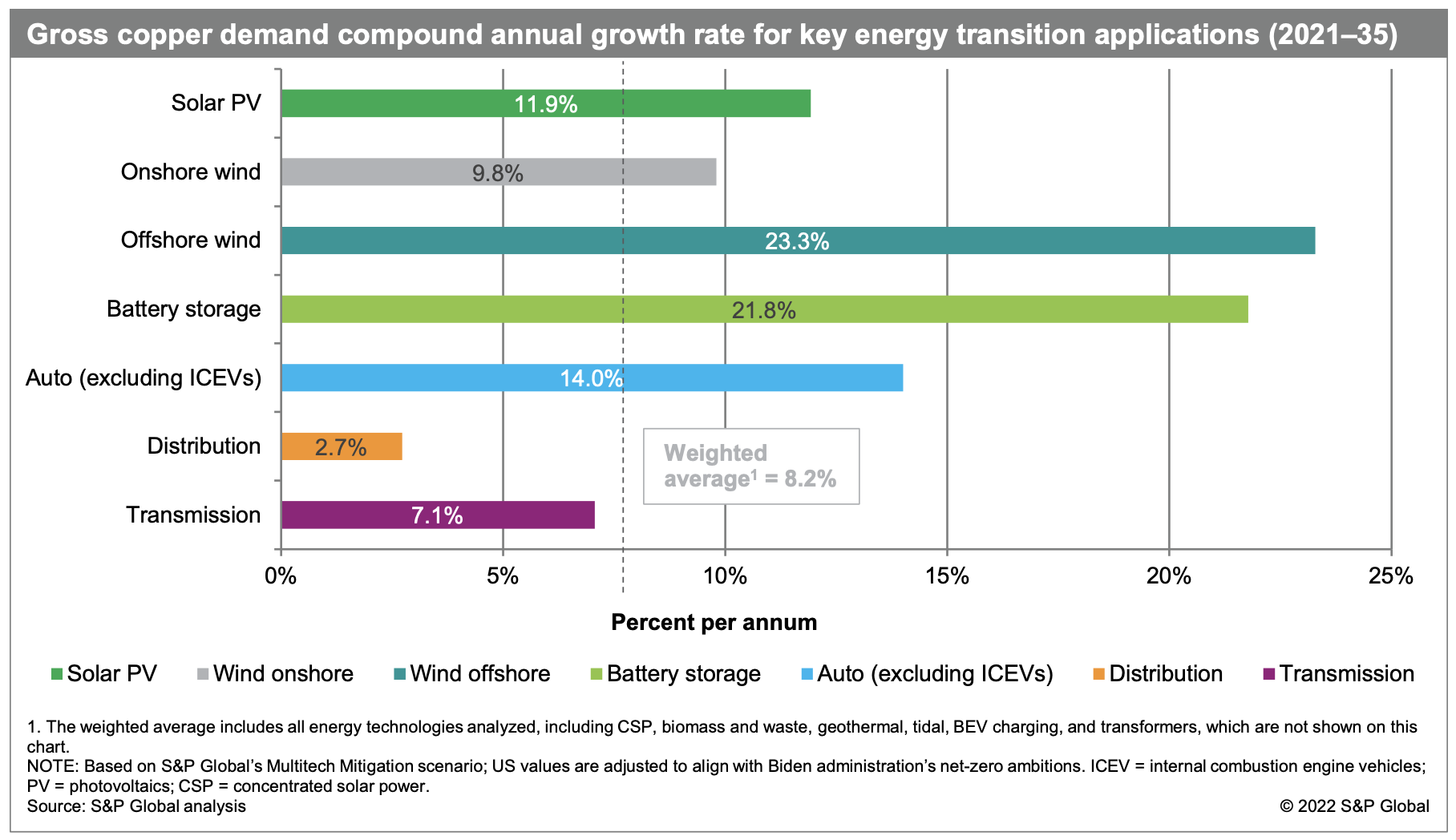
Think about electric vehicles (EVs). A standard internal combustion engine uses around 23 kg of copper — but a hybrid vehicle uses about double that, and a fully electric vehicle uses nearly four times as much. Wind turbines, solar panels, and battery storage systems all require significant amounts of copper too.
The International Energy Agency has identified copper as a fundamental element of sustainable energy technologies, most notably in offshore wind power and battery storage. It’s not a stretch to call it the ‘basic metal of electrification.’
According to S&P Global’s The Future of Copper report, global copper demand is expected to double by 2035 — and continue growing after that. The supply gap this creates is one of the most pressing resource challenges of our time.
The Supply Challenge: Can We Keep Up with Demand?
Here’s where it gets complicated. Despite the United States sitting on approximately 48 million metric tons of copper reserves, around 45% of its apparent copper consumption is imported. Nearly half of all refined copper used in the U.S. comes from Chile, with Canada and Mexico contributing significant supplies as well.
There are currently 25 active copper mines within U.S. borders, but most have a production capacity of less than 100,000 metric tons per day. Proposed projects like Rosemont and Resolution Copper have the potential to dramatically boost domestic supply — but they’ve been tangled up in permitting processes since 2007 and 2013, respectively.
The problem? The U.S. mine permitting process takes roughly five times longer than in comparable countries like Canada and Australia — nations with equally rigorous environmental standards. That delay isn’t just frustrating; it has real consequences for energy security, economic competitiveness, and the country’s ability to meet its own sustainability goals.
Why Domestic Copper Production Matters More Than Ever
Developing a robust domestic copper supply isn’t just about meeting industrial demand — it’s a matter of national strategy. A reliable local supply chain means greater energy independence, stronger economic resilience, and the ability to lead (rather than follow) in the global clean energy race.
The resources are there. What’s needed now is a modernised permitting framework that allows responsible mining to proceed at the pace the energy transition demands — without compromising the environmental standards that make those processes worthwhile.
The Bottom Line
Copper has been at the heart of human progress for thousands of years — and it’s showing no signs of stepping aside. Whether it’s powering the device you’re using right now, enabling the EV on your street, or storing renewable energy for tomorrow’s grid, copper is everywhere. Understanding the uses of copper — and ensuring we have enough of it — is one of the defining resource challenges of our generation.
Want to help move the needle? Learn more about mine permitting reform and take action to support a sustainable domestic copper supply.
As noted by the International Energy Agency, copper is a fundamental element of sustainable technologies, most notably offshore wind power and battery storage. Yet despite the 48 million metric tons of copper in U.S. reserves, 45% of our apparent consumption is imported. Nearly half of all U.S. refined copper comes from Chile, with Canada and Mexico providing essential supplies as well.
The United States must further develop a domestic supply of copper to stay competitive in the race for our energy future. We have the resources, but the lengthy U.S. mine permitting process is slowing down our competitiveness, with it taking five times longer to gain approval to mine domestic minerals than it does for countries like Canada and Australia, nations with comparable environmental standards. The domestic production of copper is not only essential to U.S. sustainability but also to our economy.
There are currently 25 mines within U.S. borders, most with a production capacity of less than 100,000 metric tons per day. Proposed mines such as Rosemont and Resolution Copper have the potential to supply large amounts of copper but have been tied up in permitting since 2007 and 2013, respectively.
It’s time for the world to modernise its permitting processes and build the industrial base needed for a more sustainable future.
Learn more here and take action here to support mine permitting reform.
Author: Gianluigi Nicolosi – Logistics Writer


